
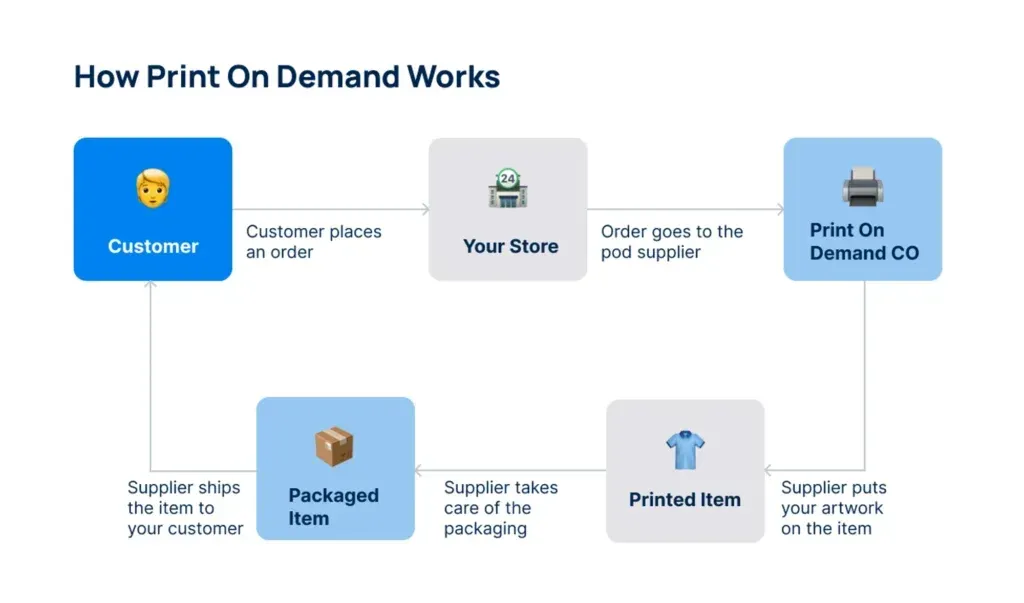
Scale Your Print on Demand is a powerful framework for transforming a transactional POD business into a scalable, repeatable machine that can operate with less guesswork, enabling you to convert ideas into steady, profitable channels. In today’s competitive ecommerce landscape, relying on great designs alone isn’t enough; you need to implement print on demand automation to streamline production, reduce errors, and free your team to focus on product strategy, branding, and customer experience. Outsourcing for print on demand can extend capacity, enabling you to partner with vetted specialists for fulfillment, design, and support while you maintain control over strategy and quality. This approach hinges on scaling a PoD business by pairing automation in ecommerce printing with POD outsourcing strategies that align on standards, SLAs, and data security, so you can grow without sacrificing consistency or customer trust. By documenting repeatable processes and measuring outcomes, you unlock capacity to invest in higher-impact initiatives long-term.
Moving beyond the basics, the topic shifts to building scalable systems that run with minimal manual oversight, so teams can pursue growth opportunities rather than firefight daily tasks. This lens emphasizes automation in ecommerce printing as a strategic asset—automating routine data flows, alerts, and customer communications to create consistent experiences at volume. Equally important is shaping outsourcing for print on demand partnerships that align incentives, protect IP, and deliver reliable outputs, enabling you to expand product lines without sacrificing quality. When you pair these capabilities with a clear governance model and POD outsourcing strategies, you create scalable workflows that support scaling a PoD business while maintaining quality. In the end, sustainable growth comes from deliberate systems and smart automation across platforms, with print on demand automation reinforcing efficiency and customer value.
Scale Your Print on Demand: Transforming a PoD Business with Automation and Outsourcing
Scale Your Print on Demand represents a structured approach to turning a transactional PoD operation into a scalable, repeatable machine. By embracing print on demand automation and outsourcing for print on demand, you move beyond the limitations of manual grinding and inconsistent workflow handoffs. This shift enables faster iteration on product ideas, more reliable fulfillment, and a consistent customer experience across channels, all while keeping fixed costs in check. In essence, automation and outsourcing become the levers that unlock capacity you didn’t know existed.
To implement this effectively, start by mapping end-to-end processes from design concept to customer delivery. Identify high-volume, rule-based tasks suitable for automation, and earmark non-core activities for outsourcing. By establishing clear governance, SLAs, and performance metrics, you can measure ROI, reduce cycle times, and steadily scale your product strategy, branding, and customer delight without sacrificing quality.
Automation in Ecommerce Printing: Streamlining Operations for Fast Fulfillment
Automation in ecommerce printing touches every stage of the PoD workflow—from order routing to production handoffs and customer communications. Implementing print on demand automation for routing ensures orders reach the most capable partner based on region, stock, and product, reducing delays and human error. Automated file checks, color management, and template-driven listings also minimize misprints and misaligned designs, accelerating time to market while preserving brand integrity.
Beyond production, automation in ecommerce printing supports dynamic pricing, personalized order updates, and real-time inventory synchronization across marketplaces. A data-driven approach helps you monitor fulfillment times, defect rates, and customer satisfaction, enabling you to optimize operations continuously and keep a competitive edge in a crowded marketplace.
Outsourcing for Print on Demand: Choosing Partners and Managing SLAs
Outsourcing for print on demand is about augmenting capabilities, not replacing your team. Start by outsourcing non-core activities such as design, content optimization, and tier-1 customer support while maintaining strategic control over product strategy and brand voice. Selecting reliable POD providers and logistics partners requires rigorous evaluations, pilot programs, and clearly defined SLAs that specify quality, turnaround times, data security, and IP protection.
Effective outsourcing hinges on governance and relationship management. Establish onboarding playbooks, escalation paths, and regular performance reviews to ensure partners stay aligned with your standards. Treat vendors as extensions of your brand by enforcing consistent tone, response times, and quality controls, while maintaining visibility with dashboards and shared metrics.
POD Outsourcing Strategies: Building a Global Network Across Regions
POD outsourcing strategies involve cultivating a resilient network of regional partners to scale capacity and reduce lead times. By diversifying suppliers and carriers, you can navigate regional demand fluctuations and currency shifts while preserving product quality. Pilot programs help validate new vendors and regions, providing data to inform onboarding, pricing, and service level expectations.
A global outsourcing approach also demands robust quality control and standardized SOPs across partners. Implement uniform QA checklists, color proofs, and print specifications, then integrate these standards into your centralized dashboards. This ensures consistency as you expand into new markets, improving customer satisfaction and freeing up internal resources to focus on product ideation and brand-building.
Scaling a PoD Business: Metrics, Playbooks, and a Phased Implementation
Scaling a PoD business requires a phased blueprint: audit and map existing processes, prioritize automation opportunities, select outsourcing partners, standardize operations, and continuously optimize. Start by documenting recurring tasks across order intake, production, fulfillment, and post-purchase support. Use impact and feasibility scoring to prioritize automation and pilot small, measurable changes before broad rollout.
A disciplined governance framework is essential for sustainable growth. Build playbooks and dashboards to monitor key metrics such as fulfillment time, defect rate, customer satisfaction, cost per order, and SLA compliance. As you iterate through phases, you’ll uncover opportunities to expand automation triggers, integrate new tools, and deepen outsourcing partnerships, all while staying focused on delivering a superior customer experience at scale.
Frequently Asked Questions
What is Scale Your Print on Demand, and how does print on demand automation fit into it?
Scale Your Print on Demand is a framework that transforms a transactional PoD business into a scalable, repeatable machine by pairing automation with outsourcing. Core automation opportunities include print on demand automation tasks such as order routing, product creation and listing updates, pricing rules, and automated customer communications. Outsourcing for print on demand complements automation by delegating production, design, and support to trusted partners, enabling faster fulfillment, consistent quality, and a lower cost per order. Following this approach aligns with automation in ecommerce printing and helps you focus on strategy, branding, and customer delight.
How does outsourcing for print on demand fit within Scale Your Print on Demand?
Outsourcing for print on demand augments your capacity without sacrificing control. It involves partnering for fulfillment, design, content optimization, and customer support, with clear SLAs and onboarding processes. POD outsourcing strategies emphasize pilots, defined quality standards, and vendor governance to maintain brand consistency while you scale.
What phased framework does Scale Your Print on Demand propose for scaling a PoD business?
Phase 1 Audit and map tasks; Phase 2 prioritize automation opportunities; Phase 3 select outsourcing partners and run pilots; Phase 4 standardize and document; Phase 5 optimize and scale. This phased approach supports scaling a PoD business by gradually increasing automation and outsourcing capacity while tracking ROI.
Which tools and platforms support Scale Your Print on Demand for automation in ecommerce printing?
Key tools include Shopify or Etsy as sales channels; POD providers like Printful or Printify; automation platforms such as Zapier or Make for workflows; order management solutions like Ordoro or ShipStation; and analytics dashboards to monitor fulfillment and customer metrics. Together, these tools enable automation in ecommerce printing and streamline scale.
What metrics matter most when Scale Your Print on Demand is implemented?
Track fulfillment time, on time delivery rate, order defect rate, customer satisfaction scores and NPS, cost per order and gross margin, channel performance, and SLA compliance for vendors and internal teams. Monitoring these metrics supports scaling a PoD business and validates the impact of POD outsourcing strategies and automation investments.
| Aspect | Key Points |
|---|---|
| Goals of Scaling PoD Business |
|
| What to automate in a Print on Demand operation |
|
| Outsourcing for print on demand |
|
| A practical framework to scale: combine automation and outsourcing in phases |
|
| Tools and platforms that enable scale |
|
| Metrics that matter when scaling PoD |
|
| Common pitfalls and how to avoid them |
|
| A simple real-world example |
|
Summary
Scale Your Print on Demand is an ongoing journey of transforming operations into a scalable, customer-centric machine. By combining automation with outsourcing, you can unlock capacity, improve efficiency, and deliver a superior customer experience at scale. This approach starts with high-impact automation opportunities, aligns trusted outsourcing partners with your brand, and builds governance through SOPs, SLAs, and data-driven reviews. As you iterate, Scale Your Print on Demand reveals its true power: disciplined execution, measurable improvements, and a relentless focus on customer value.